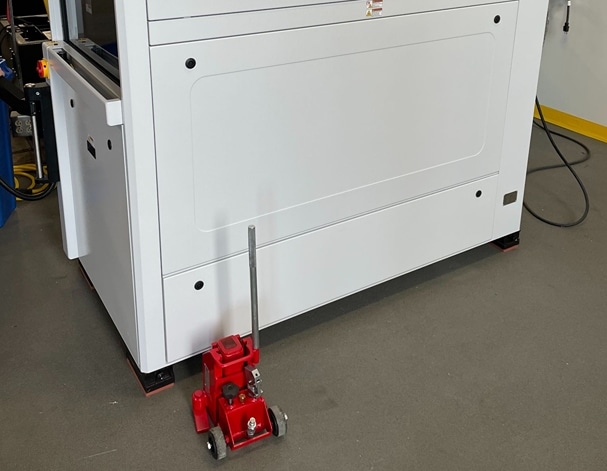
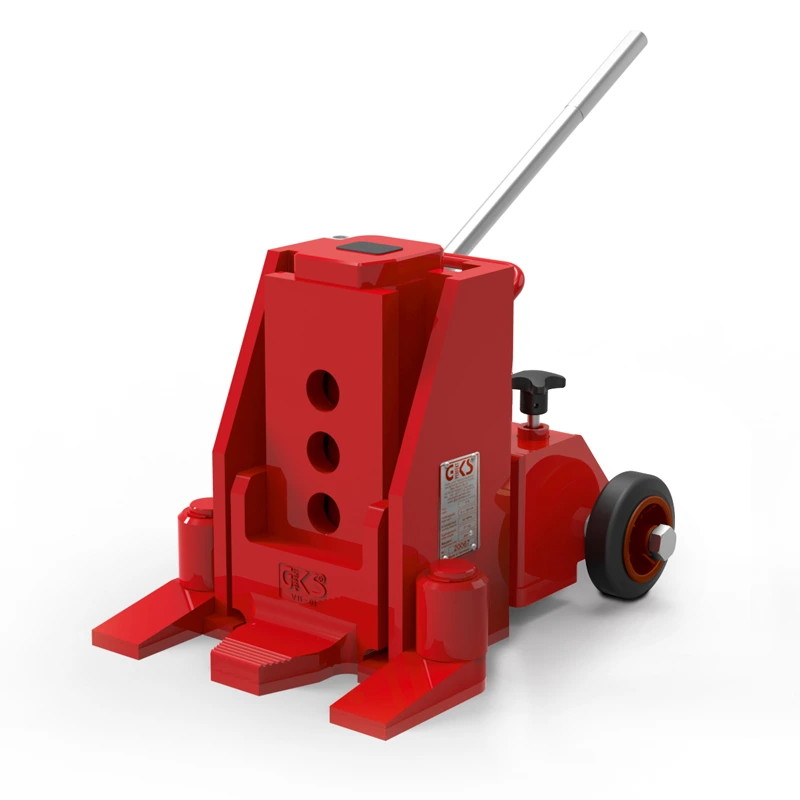
GKS Hydraulic Toe Jacks are the perfect machines for heavy lifting and maintenance in a variety of settings, both indoor and outdoor. Ever reliable and efficient, our Hydraulic Toe Jacks are available in four models, all of which are rigorously vetted through a testing and approval process to ensure the highest design and manufacturing standards are met.
Every machine is designed to be ready to work on day one, and day 1,000 and beyond. We provide five-year limited warrantees on GKS products and offer a lifetime of technical support. Want to know what you can do to keep your Hydraulic Toe Jack in peak condition? Follow the helpful tips below.
General Maintenance
Your Hydraulic Toe Jack should always be stored upright in a dry and non-corrosive environment. Make sure to regularly perform the following on your machine:
- Keep your Toe Jack lubricated! Grease your guides regularly.
- Grease your lifting piston on a semi-regular basis:
- Remove the slider. In most models, you will be able to find the screw at the back of the machine. On the V5 model, the screw is located on the side.
- Pump the lifting piston to an appropriate height for greasing.
- Press the piston downwards to its lowest position.
- Clean your air vent screw with compressed air.
Yearly Maintenance
Oil must be changed on a yearly basis. Here are the steps to follow:
- Using a size six Allen wrench, remove the screws from the bottom side of the housing.
- Remove the hydraulic unit backwards.
- Open the lowering screw.
- Press down the lifting piston.
- Screw out the air-vent screw using a size 17 open-end wrench.
- Empty the used oil and dispose according to statutory requirements.
- Load in new oil based on the specifications that can be found here.
Refer to our operating manual for more detailed information on the maintenance process and to see a visual guide.
Troubleshooting and Repairs
Experiencing issues? A multitude of reasons can cause a load to not lift or not completely lift properly. Some common causes may include dirty or loose screws or fissuring seals. These can easily be fixed by cleaning or tightening screws and replacing the worn seal. You’ll find that it may be a simple issue that is causing your problem.
For a full list of causes, refer to page 9 of the operating manual.