Millwrights and riggers are experts at moving large, heavy, and awkwardly shaped equipment through extremely tight spaces. This community of skilled professionals often refer to the “millwright mile,” jargon for leeway of an inch or more. For experienced millwrights and riggers, having even an inch of wiggle room when moving a large piece of equipment feels like plenty of additional space to maneuver.
“Wow, we’ve got a millwright mile to make this turn!”
The concept of the millwright mile illustrates the importance of maneuverability when choosing a machine skate system. In many situations, such as tight, crowded hallways and narrow doorways, there truly are just inches of margin to work with. Proper planning and a strong understanding of the path of transit is key to designing a solution with enough maneuverability for a smooth, successful move. Choosing the wrong level of maneuverability can result in a failed move.
>>Explore GKS Machine Skates
The Importance of Selecting the Right Machine Skate
In the world of industrial lifting, the size, shape, and weight distribution of the load, as well as the size of the crew and the floor surfaces will all impact a move. When margins are slim, success can depend entirely on using the right machine skate for the job.
Some dollies are best for 90-degree turns and straight paths of travel, while others are omnidirectional, offering 360-degree maneuverability, lateral movement, and diagonal shifts.
When it comes to maneuverability, there are two primary factors to consider: path flexibility and facility constraints.
Path Flexibility:
- While there may be multiple ways to travel from Point A to Point B, sometimes there’s only one—and it may not be ideal. Narrow pathways and multiple tight turns can make for a challenging move. Understanding these challenges ahead of time allows crews to design a moving solution that makes the process as smooth as possible. If a move is a long-term or recurring event, consider the longevity of the solution. An ideal moving path may be available today, but future construction projects, rearrangements, and other changes can make it inaccessible in the future.
Facility Constraints
- Some facilities have wide hallways, doorways, and clear paths throughout. Others are crowded with tight pathways, narrow doorways, and sharp turns. A moving solution that works well in one facility may be less practical in another. Understanding the constraints of the facility is key to choosing the right solution.
F/L 3-Point Systems vs. RL Rotating Machine Skates: Choosing Your Strategy
GKS is proud to offer two different moving solutions, each with its particular advantages for certain types of moves.
F/L 3-Point Systems
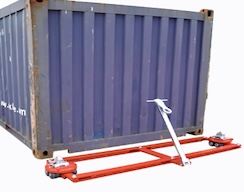
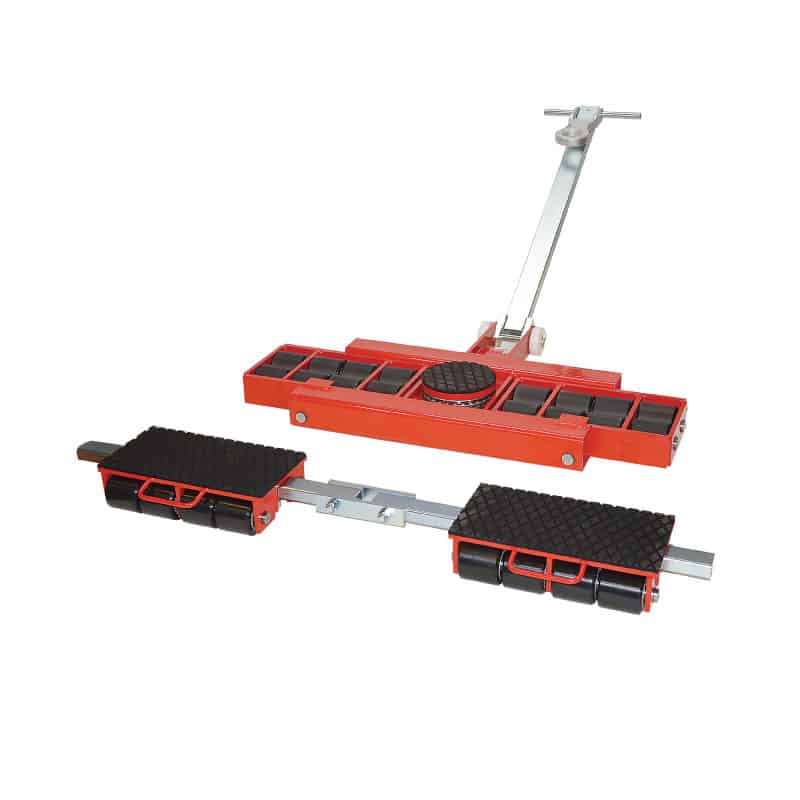
How It Works: A three-point system is composed of a lead skate, or L-skate, with a 360-degree steering pad and a following skate, or F-skate, that supports the back of the load. The maneuverability of a GKS three-point machine skate system might be compared to a semi-truck: It can navigate a 90-degree turn easily, thanks to the steering pad on the L-skate, but, depending on the setting, it may need a little extra space.
The Advantage: A three-point system is an excellent option for moving cargo in and out of facilities and navigating long aisles. F/L machine skates give users maximum control over the direction of travel. Additionally, three-point systems are among the most cost-effective industrial moving solutions, making them a practical option for many users.
RL Rotating Machine Skates
How it Works: For situations that call for the highest degree of maneuverability and lateral movement, rotating dollies, also called omnidirectional dollies or omni skates, are an excellent option. A rotating machine skate system from GKS has 360-degree maneuverability, so the load can travel forward, backward, sideways, and diagonally. Additionally, both ends of the load can be manipulated, giving crews tremendous flexibility when navigating compact spaces and sharp turns.
Keep In Mind: The primary drawback to a rotating machine skate system is a tendency to drift a little when navigating long, straight pathways, over fifty feet or more. However, this can be mitigated by a team member who can stay close to the rear end of the load and readjust for drift.
Find the Right Moving Solution With GKS
If you’re ready to invest in a machine skate system with excellent maneuverability, but you’d like some help choosing the right one, GKS Moving & Lifting Solutions can help.
Our US-based customer service team will collaborate with you to understand your needs and goals, so you can make a confident purchase that will last you for years to come.
Every GKS product comes with a five-year warranty, and every unit undergoes thorough testing before it leaves our facility to ensure that it will perform exactly as designed.